
Digital risk protection services play a vital role in modern cybersecurity strategies. As attackers increasingly operate outside corporate networks, organizations must protect not only internal systems but also their external digital presence.
From phishing websites and fake domains to social media impersonation and mobile app abuse, external threats directly target customers and brand trust. These services address this challenge by providing visibility and response capabilities across the open web, dark web, and social platforms.
What are digital risk protection services
These services are designed to identify, analyze, and mitigate threats that exist beyond an organization’s perimeter. They focus on attacker-controlled infrastructure rather than internal endpoints.
They monitor for phishing domains, brand impersonation, fake mobile applications, leaked credentials, and fraud campaigns. Unlike traditional security tools, these services act where attacks originate.
Some organizations still associate these capabilities with legacy terms like digital risk protection drp, but modern services are far more comprehensive and proactive.
How digital risk protection services work
Digital risk protection services begin by mapping an organization’s digital footprint. This includes official domains, subdomains, email infrastructure, mobile apps, and social media profiles.
Once the baseline is established, continuous monitoring scans for suspicious activity across domain registrations, hosting environments, certificate issuance, marketplaces, and social networks.
Advanced detection uses machine learning and behavioral analysis to identify malicious intent. When threats are confirmed, response workflows initiate takedowns and disruption actions through registrars, hosting providers, and platforms.
Providers such as PhishFort combine automation with expert-led investigation to ensure accuracy and speed.
Many security teams still ask why this area is such a critical focus. The answer lies in how attacks have evolved.
Many security teams still ask why digital risk protection is such a critical focus. The answer lies in how attacks have evolved.
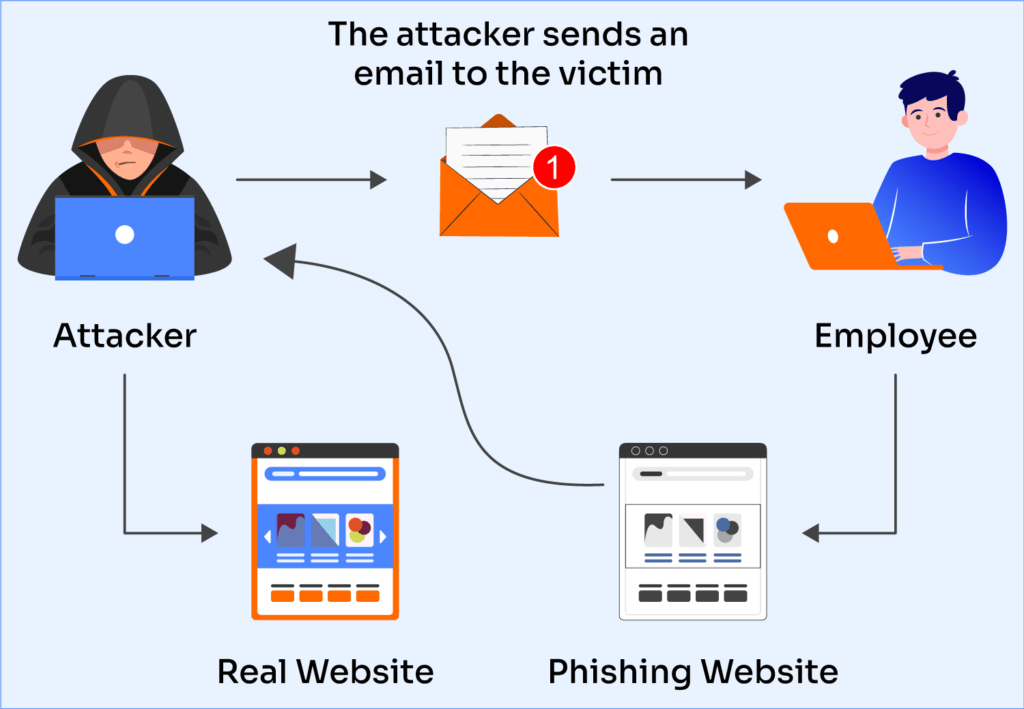
Attackers exploit trusted brands rather than technical vulnerabilities. They create convincing phishing pages, clone login portals, and impersonate companies on social media to deceive users directly.
These services reduce this risk by stopping attacks before customers interact with them, limiting fraud, reputational damage, and regulatory exposure.
Key capabilities
External threat monitoring
Continuous visibility across domains, social platforms, app stores, and the dark web ensures early detection of emerging threats.
Phishing and impersonation detection
Digital risk protection services identify phishing sites, fake login pages, spoofed emails, and fraudulent profiles abusing brand identity.
Automated takedowns
Fast takedown workflows significantly reduce the lifespan of malicious assets, protecting users before damage occurs.
Threat intelligence and reporting
Actionable intelligence helps organizations understand attacker behavior, campaign trends, and recurring infrastructure.
Compliance and brand trust
By proactively addressing external threats, organizations support compliance requirements and maintain customer confidence.
Real-world use cases
Financial services
Banks and payment providers rely on these services to detect phishing domains and credential harvesting campaigns targeting customers.
SaaS platforms
SaaS companies use these services to prevent fake login portals and account takeover attempts.
E-commerce brands
Retailers protect customers from fake promotions, fraudulent checkout pages, and social media scams.
In each scenario, external threat visibility reduces incident response costs and customer harm.
Digital risk protection services vs traditional security tools
Traditional security tools focus on endpoints, networks, and cloud environments. Digital risk protection services focus on attacker infrastructure and customer-facing threats.
This external-first approach answers a common question: why is digital risk protection now essential? Because most attacks succeed before reaching internal defenses.
Choosing the right digital risk protection services
When evaluating providers, coverage breadth and response speed are critical. Services should monitor new TLDs, social platforms, and emerging channels continuously.
Managed services add value by reducing false positives and handling complex takedown processes. PhishFort delivers both automation and human expertise to scale protection without increasing internal workload.
For broader context, industry research from ENISA and APWG reinforces the growing importance of external threat mitigation.
Explore how PhishFort digital risk and brand protection services work in real environments